Buying an all-terrain vehicle (ATV) can be an exciting investment for outdoor adventures, farm work, hunting, trail riding, or recreational activities. However, paying the entire purchase price upfront may not be practical for every buyer. ATV financing allows qualified customers to purchase a new or used ATV and spread the cost across monthly payments.
Several financing options are available, including powersports dealership financing, bank loans, credit-union loans, and manufacturer promotions. Each option may have different interest rates, approval requirements, repayment periods, and fees. Comparing these choices can help you find a payment plan that fits your budget.
In this guide, you’ll learn how ATV loans work, how to compare financing offers, what lenders consider during approval, and how to estimate the total cost of your purchase.
What Is ATV Financing?
ATV financing is a way to pay for an all-terrain vehicle over an agreed period rather than purchasing it entirely with cash. A lender provides financing for the purchase, and the borrower repays the amount through scheduled installments with interest and any applicable fees.
ATVs are commonly used for recreational riding, agricultural work, hunting, property maintenance, and off-road exploration. Depending on the lender, financing may be available for different brands, models, engine sizes, and vehicle conditions.
Common ATV financing options include:
- Dealership financing: Apply through the dealership selling the ATV.
- Bank loans: Obtain a vehicle or personal loan from a bank.
- Credit-union financing: Apply for a recreational vehicle loan through an eligible credit union.
- Manufacturer promotions: Check for special financing offers on selected models.
- Personal loans: Use an eligible personal loan to purchase an ATV, subject to its terms and cost.
Your eligibility and final financing terms will depend on the lender and your financial circumstances.
How Does ATV Financing Work?
The process is similar to financing a car or another recreational vehicle. You select an ATV, submit a financing application, receive an offer if approved, and repay the loan according to the agreement.
Step 1: Choose Your ATV
Decide whether you want a new or used ATV. Consider the vehicle’s purchase price, intended use, reliability, maintenance requirements, and insurance costs.
If you need an ATV for regular farm work, a utility-focused model may be more appropriate than a performance model designed primarily for recreational riding.
Step 2: Set Your Budget
Determine how much you can comfortably pay upfront and how much you need to borrow. Remember that the purchase price is only part of the total cost.
You may also need to budget for:
- Sales tax and registration.
- Insurance, where required or appropriate.
- Safety equipment and protective clothing.
- Fuel and routine maintenance.
- Repairs, storage, and accessories.
Step 3: Compare Lenders
Request financing estimates from more than one lender. Compare annual percentage rates (APRs), repayment terms, fees, down-payment requirements, and early repayment conditions.
A longer repayment period may reduce the monthly installment, but it can increase the total interest paid.
Step 4: Submit an Application
Lenders commonly request personal information, employment or income details, and permission to review your credit history. Depending on the application, they may also need information about the ATV.
Step 5: Review the Agreement
Before signing, confirm the amount financed, APR, monthly payment, payment schedule, total repayment amount, and any additional charges.
Do not rely exclusively on the monthly payment advertised by a dealership. Understand the complete cost of the agreement.
Best ATV Financing Options to Compare
There is no single lender that offers the best deal to every buyer. The right choice depends on your credit profile, location, purchase price, and the type of ATV you want.
| Financing option | Potential benefit | What to check |
|---|---|---|
| Dealership financing | Convenient application during purchase | Dealer fees, APR, and optional products |
| Credit-union loan | May offer competitive recreational vehicle rates | Membership eligibility and loan restrictions |
| Bank loan | Existing banking relationship may simplify the process | Interest rate, fees, and approval conditions |
| Manufacturer promotion | Special offers may reduce borrowing costs | Eligible models, required credit tier, and offer expiration |
| Personal loan | May provide flexibility for certain purchases | APR, repayment period, and whether the loan is secured |
Dealership ATV Financing

Many ATV dealerships work with outside lenders to offer financing at the point of sale. This can make it convenient to compare available terms while selecting your vehicle.
Some dealerships may advertise promotional rates on particular models. These offers can be attractive, but check whether you qualify and whether choosing promotional financing means giving up another discount or incentive.
Credit-Union ATV Loans
Credit unions sometimes offer dedicated recreational vehicle or powersports loans. Their terms may be competitive, although membership and vehicle eligibility requirements can apply.
For example, America First Credit Union publishes financing information for ATVs and other off-road vehicles, while 1st Advantage Federal Credit Union provides information about new and used ATV loans. Rates and conditions vary by lender and can change over time.
Manufacturer Financing Offers
ATV manufacturers and participating dealers may offer special financing for selected models or promotional periods. Check the manufacturer’s official website and ask the dealer to explain the terms in writing.
Compare the promotional offer with an ordinary loan quote. A low advertised rate is useful only if the vehicle, term, and your application qualify.
What Credit Score Do You Need for ATV Financing?
There is no universal credit score required for every ATV loan. Each lender uses its own approval criteria, which may include credit history, income, existing debts, down payment, and the value of the vehicle.
A stronger credit profile may improve your chances of qualifying for a lower rate. Applicants with limited or damaged credit may face higher rates, larger down-payment requirements, or fewer available offers.
Factors That Lenders May Consider
- Credit history: Previous repayment behavior and outstanding credit obligations.
- Income: Whether you have enough regular income to support the payment.
- Debt-to-income ratio: How existing debt payments compare with your income.
- Down payment: How much of the purchase price you can pay upfront.
- Vehicle details: The ATV’s age, value, condition, and eligibility under the loan program.
- Loan amount and term: How much you want to borrow and how long you need to repay it.
Before submitting multiple applications, ask lenders whether they can provide an initial estimate and whether the application requires a hard credit inquiry.
How Much Does ATV Financing Cost?
The total cost depends on the purchase price, down payment, interest rate, repayment term, taxes, fees, and any optional products included in the agreement.
Consider this simplified example.
Suppose you buy an ATV for $8,000 and make a $1,000 down payment. You finance the remaining $7,000 with a fixed APR of 8.5% for 48 months.
<text weight=”medium” size=”sm”>Illustrative loan estimate</text>
| Item | Example amount |
|---|---|
| ATV purchase price | $8,000 |
| Down payment | $1,000 |
| Amount financed | $7,000 |
| Illustrative APR | 8.5% |
| Loan term | 48 months |
| Estimated monthly payment | About $173 |
| Estimated total of loan payments | About $8,300 |
| Estimated interest over the term | About $1,300 |
| Total including down payment | About $9,300 |
<text color=”secondary” size=”xs”>These figures are illustrative estimates for a fixed-rate, amortizing loan. They exclude taxes, fees, insurance, and other charges. Your lender’s actual quote may differ.</text>
The example shows why it is important to consider the total repayment amount instead of focusing only on the monthly installment.
How to Get Affordable ATV Financing
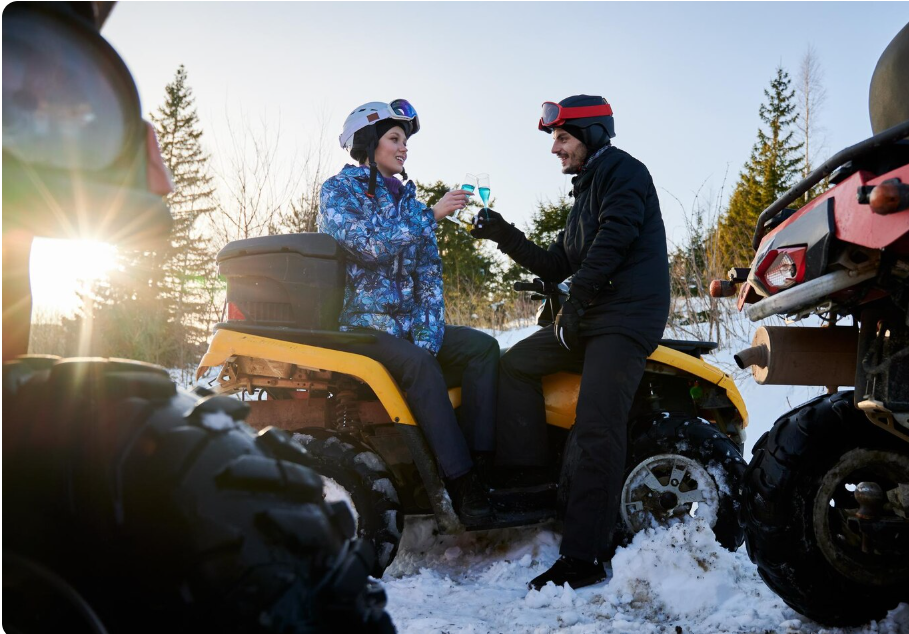
Finding affordable financing involves comparing offers and choosing a loan that matches your budget.
Make a Larger Down Payment
A larger down payment reduces the amount you need to borrow. This may lower your monthly payment and the interest charged over the loan term.
However, avoid using all your available savings if doing so would leave you without money for emergencies or essential expenses.
Compare APRs
The annual percentage rate helps you compare borrowing costs because it can include interest and certain lender fees. Review the APR alongside the amount financed and repayment period.
Make sure the offers you compare use similar loan amounts and terms.
Choose a Suitable Loan Term
A shorter term generally means higher monthly payments but less time for interest to accumulate. A longer term may make monthly payments more manageable but can increase total borrowing costs.
Choose the shortest term you can comfortably afford without putting pressure on your regular budget.
Check Your Credit Before Applying
Review your credit reports and address any errors you discover. Pay existing bills on time and avoid taking on unnecessary debt before applying.
These steps do not guarantee approval or a particular interest rate, but they can help you present a stronger application.
Negotiate the Purchase Price Separately
Agree on the ATV’s purchase price before focusing on the monthly payment. A low installment can conceal a longer repayment term or a higher total price.
Compare the vehicle’s total out-the-door price and the full financing agreement before making a decision.
New vs. Used ATV Financing
Both new and used ATVs may qualify for financing, depending on the lender’s rules. However, the available terms may differ.
| Feature | New ATV | Used ATV |
|---|---|---|
| Purchase price | Usually higher | Often lower |
| Vehicle history | Typically easier to verify | Requires careful inspection |
| Financing eligibility | Depends on model and lender | May depend on age and condition |
| Maintenance considerations | Warranty may be available | Repairs may be more likely |
| Resale value | Depends on model and depreciation | Depends on condition and market demand |
A used ATV may reduce the amount you need to borrow, but inspect the vehicle carefully. Check its service history, frame, engine, tires, suspension, and title documentation where applicable.
A lower purchase price does not automatically make a used ATV the better financial choice if it needs expensive repairs.
Common ATV Financing Mistakes to Avoid
Before signing an ATV loan agreement, watch out for these common mistakes.
- Choosing only by monthly payment: Compare the total amount payable and the length of the loan.
- Ignoring extra costs: Budget for maintenance, insurance, registration, and safety equipment.
- Accepting the first offer: Compare a dealer quote with independent financing options.
- Skipping the contract review: Read the interest rate, fees, payment schedule, and early repayment rules.
- Borrowing more than necessary: Avoid financing unnecessary accessories if they make the loan unaffordable.
- Assuming guaranteed approval: Be cautious of advertisements promising approval regardless of credit history.
- Overlooking late-payment consequences: Understand any late fees and the lender’s policies before borrowing.
Taking time to compare offers can help you avoid a loan that becomes difficult to manage later.
Frequently Asked Questions About ATV Financing
1. Can I finance an ATV with bad credit?
It may be possible. Some lenders consider applications from people with less-than-perfect credit, but approval is not guaranteed. You may need a larger down payment or face a higher interest rate. Compare the total cost before accepting an offer.
2. Can I finance a used ATV?
Yes, some banks, credit unions, and dealerships offer financing for used ATVs. Lenders may set restrictions based on the vehicle’s age, condition, value, and model. Confirm eligibility before applying.
3. How long can you finance an ATV?
Repayment terms vary by lender and loan amount. Some programs offer terms of several years, and certain lenders advertise terms of up to seven years for eligible vehicles. Longer terms can increase the total interest paid.
4. Is dealership financing better than a bank loan?
Not necessarily. Dealership financing may be convenient and may include promotional offers, while a bank or credit union may provide a competitive alternative. Compare APR, fees, repayment terms, and total cost before choosing.
5. Can I pay off my ATV loan early?
Many lenders allow early repayment, but the rules depend on the agreement. Ask whether a prepayment penalty applies and whether additional payments reduce principal. Get the terms in writing before signing.