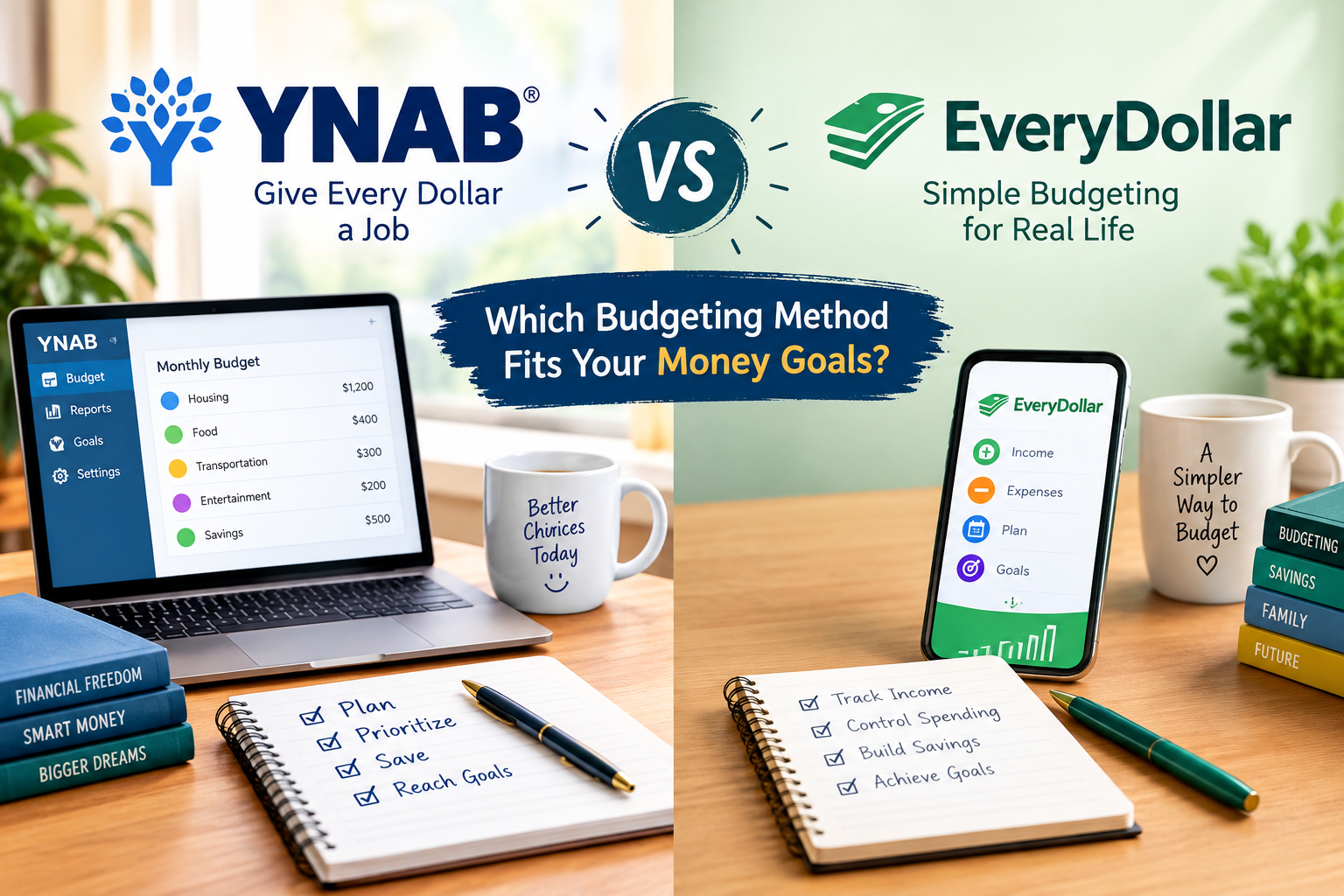
Managing money can become much easier when you have a clear budgeting system. Instead of wondering where your income went at the end of each month, a budgeting app can help you assign money to specific expenses, monitor spending, and plan ahead. Two well-known options are YNAB and Every Dollar, each built around a slightly different approach to personal budgeting.
The choice between ynab vs everydollar often comes down to how much structure you want, how you prefer to plan expenses, and whether you are comfortable paying for budgeting software. Both platforms can help users organize income and spending, but their workflows, features, and budgeting philosophies are not identical.
Understanding YNAB
YNAB, short for You Need A Budget, is designed around a proactive budgeting philosophy. The system encourages users to give every available dollar a specific purpose. Rather than simply recording what has already been spent, the approach focuses on deciding how available money should be used before it is spent.
A major part of the YNAB method is assigning money to categories such as rent, groceries, transportation, utilities, entertainment, savings, and future expenses. This creates a spending plan that can adapt as circumstances change.
YNAB also emphasizes planning for irregular expenses. Annual insurance payments, holiday spending, car repairs, subscriptions, and other less frequent costs can be divided into smaller monthly targets. This can make large future expenses feel more manageable.
Another important characteristic is that YNAB encourages users to work with money they currently have available. The system is designed to help people prioritize immediate obligations while gradually building greater financial flexibility.
Understanding EveryDollar
EveryDollar is a budgeting app developed around a zero-based budgeting concept. The basic idea is to plan where income will go so that expected income minus planned expenses equals zero.
Users can create categories for housing, food, transportation, debt payments, savings, entertainment, and other spending areas. Income is then assigned across these categories according to the user’s financial priorities.
EveryDollar has a straightforward interface that can appeal to people who want a relatively simple monthly budgeting routine. Instead of focusing heavily on complex financial tracking, the platform centers on creating and following a spending plan.
The service also has free and paid functionality, with the exact features depending on the current version of the product. Users should check the latest plan details before deciding which option meets their needs.
How Their Budgeting Approaches Differ
The biggest distinction between these apps is not simply their appearance or list of features. Their budgeting workflows encourage users to think about money in somewhat different ways.
YNAB places considerable emphasis on assigning available funds to categories and adjusting the plan as spending changes. If groceries cost more than expected, for example, a user can move money from another category rather than treating the original budget as fixed.
EveryDollar is more closely associated with planning a monthly zero-based budget. Users estimate their income and assign that income to planned expenses, savings, and other priorities.
Both methods can provide structure, but the experience can feel different. Someone who enjoys detailed category management may appreciate YNAB’s approach. Someone who wants a simpler monthly planning process may find EveryDollar easier to understand.
YNAB Features
YNAB provides tools intended to support detailed financial planning. Budget categories allow users to separate different spending priorities and create targets for future expenses.
The platform also provides transaction tracking and account synchronization features, depending on the user’s setup and plan. This can reduce the amount of manual data entry required when managing multiple financial accounts.
Another useful concept is the ability to plan for upcoming expenses rather than reacting to them when they arrive. For example, instead of waiting for a yearly bill and suddenly needing a large amount of money, a user can set aside smaller amounts over time.
YNAB can therefore be particularly useful for people who want their budgeting process to become an ongoing financial planning habit rather than a once-a-month calculation.
EveryDollar Features
EveryDollar focuses strongly on creating a monthly spending plan. Users can establish categories, enter income, allocate planned amounts, and record expenses against those categories.
The platform’s simplicity can be helpful for people who are new to budgeting. A straightforward category-based system makes it easier to see how much has been planned for groceries, housing, transportation, entertainment, savings, and other areas.
Paid functionality can provide additional automation and account-related capabilities. Because pricing and included features can change, prospective users should review EveryDollar’s current official plan information before subscribing.
For users who prefer manually engaging with their budget each month, this style can provide a direct connection between income, planned expenses, and actual spending.
Pricing Considerations
Cost can be an important factor when comparing budgeting applications. A free budgeting solution may be attractive to someone who wants to start without adding another recurring expense.
YNAB operates primarily as a paid budgeting service, while EveryDollar has offered both free and paid options. The exact pricing, trials, and available features may change over time.
When comparing subscription costs, it is useful to consider the value of the features rather than looking only at the monthly or annual price. Automatic transaction importing, detailed planning tools, financial reports, and other conveniences may be worth paying for if they help a user consistently maintain a budget.
On the other hand, someone who is comfortable entering transactions manually may not need every premium feature.
Ease of Use
Ease of use depends heavily on the user’s experience and preferred budgeting style.
EveryDollar’s monthly budget structure can be relatively easy to understand. A person can enter income, assign amounts to categories, and monitor spending. This straightforward process can make it suitable for people who want a simple starting point.
YNAB may require more time to learn because its budgeting philosophy is more distinctive. New users need to understand concepts such as assigning available money, adjusting category balances, and planning for future expenses.
However, once the system becomes familiar, the detailed approach can provide a strong framework for managing changing financial priorities.
Managing Irregular Expenses
Unexpected and irregular expenses are a major challenge in personal finance. A budget that only considers monthly bills may not prepare someone for car repairs, medical costs, annual memberships, gifts, travel, or other occasional spending.
YNAB places significant emphasis on preparing for these types of expenses through category targets and forward planning.
EveryDollar can also be used to plan for savings and irregular costs by creating appropriate budget categories. The difference is primarily in how the overall budgeting process encourages users to think about those expenses.
The most effective system is ultimately the one a person will maintain consistently.
Debt and Savings Goals
Both platforms can be used to support debt repayment and savings goals. A user can create categories for credit card payments, student loans, emergency savings, vacation funds, investments, or other financial objectives.
The important benefit is visibility. When financial goals are included in the budget, users can see how much money is being directed toward those priorities.
A detailed budgeting system may also make it easier to identify spending categories that can be adjusted when someone wants to increase debt payments or savings contributions.
Neither application automatically solves debt or savings challenges. The software provides organization, while the user’s income, expenses, priorities, and financial decisions determine the actual outcome.
Mobile and Everyday Budget Management
Mobile access can be useful for people who want to check their budget while shopping or making financial decisions away from a computer.
Both YNAB and EveryDollar provide mobile experiences designed around budget management. Having access to category balances can help users make decisions before completing a purchase.
For example, if a person is considering an unplanned purchase, checking the relevant category can provide immediate context. If the category does not have enough available money, the user can decide whether to postpone the purchase or adjust another part of the budget.
This type of real-time awareness can turn budgeting from a monthly administrative task into an everyday financial habit.
Who May Prefer YNAB?
YNAB may appeal to people who want a detailed budgeting framework and are willing to spend time learning a structured method.
It can be particularly useful for individuals who have irregular expenses, variable income, multiple financial priorities, or a desire to become more intentional about how available money is allocated.
People who enjoy adjusting categories and planning ahead may also appreciate the flexibility of the system.
The main consideration is the learning curve and subscription cost. Someone looking for a very basic budgeting tool may find YNAB’s approach more detailed than necessary.
Who May Prefer EveryDollar?
EveryDollar may suit people who prefer a straightforward monthly budgeting process. Its zero-based structure gives users a clear way to assign expected income to expenses and financial priorities.
It can be a useful option for someone who wants to begin budgeting without adopting a more elaborate methodology.
People who like manually reviewing their categories every month may also appreciate the hands-on nature of the process.
However, users should compare the current free and paid features carefully because the availability of automation and other capabilities can affect the overall experience.
YNAB vs EveryDollar for Beginners
For a complete beginner, the better choice depends on how much guidance and structure the person wants.
EveryDollar’s monthly planning model can be easier to grasp initially because the basic process is simple: list income, plan expenses, allocate money, and track spending.
YNAB can take longer to understand because it introduces a specific philosophy for handling available funds. Once learned, however, that framework can provide a more detailed way to think about spending decisions and future obligations.
Rather than choosing based only on the number of features, beginners should consider which workflow feels realistic enough to maintain every week.
Which One Fits Different Financial Situations?
A person with a stable salary and predictable monthly bills may find either platform capable of meeting basic budgeting needs.
Someone with variable income may place greater importance on flexible allocation and planning because income timing can make traditional monthly budgeting more complicated.
A person preparing for large irregular expenses may value detailed category targets and forward planning.
Meanwhile, someone who primarily wants a simple monthly spending plan may prefer a less complicated workflow.
These differences demonstrate why there is no single budgeting application that is automatically suitable for everyone. Financial habits, income patterns, spending behavior, and personal preferences all matter.
Making the Comparison Practical
The most useful way to compare the two services is to consider how each one would fit into a normal month.
Start by identifying your regular income and fixed bills. Then consider variable expenses such as food, transportation, entertainment, and shopping. Add irregular expenses and financial goals. Finally, consider how much time you are willing to spend reviewing transactions and adjusting categories.
If you want extensive category management and forward-looking planning, YNAB’s methodology may be worth exploring. If you prefer a simpler zero-based monthly budget, EveryDollar may provide a more familiar structure.
It is also worth considering whether automation matters to you. Manually entering transactions can encourage awareness, while automatic importing can save time. Neither approach is inherently right for every user.
Final Thoughts
The comparison of ynab vs everydollar is ultimately a comparison of budgeting philosophies, workflows, and features. YNAB emphasizes assigning available money intentionally and planning for future expenses, while EveryDollar centers on a straightforward zero-based monthly budget. Both can help users organize spending, establish financial priorities, and monitor progress toward savings or debt goals.
Before committing to either service, consider your income pattern, spending habits, preferred level of detail, desired automation, and willingness to pay for additional features. A budgeting application works best when it fits naturally into your financial routine and is used consistently.